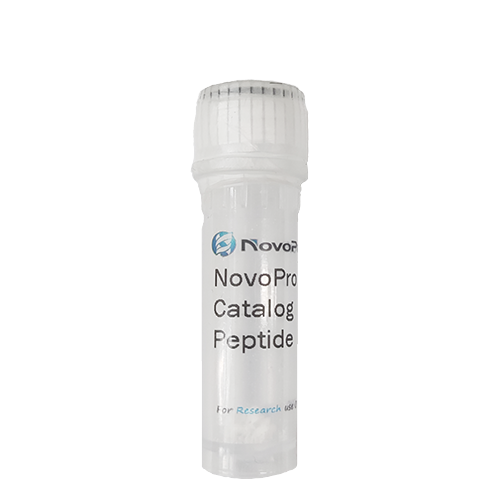
Copper tripeptide (GHK-Cu), 10 grams
Not For Human Use, Lab Use Only.
Cat.#: 319855
Special Price 199.00 USD
Availability:
In Stock
-
Product Name
Copper tripeptide (GHK-Cu), 10 grams
-
Documents
Batch to batch variation of the purity
-
Sequence Shortening
GHK-CU
-
Sequence
Gly-His-Lys-Cu
-
Length (aa)
3
-
Peptide Purity (HPLC)
99.23%
-
Molecular Formula
C14H22CuN6O4
-
Molecular Weight
400.9
-
CAS No.
89030-95-5
-
Source
Synthetic
-
Form
Powder
-
Description
Please note that each tube of GHK-Cu contains 1.0 gram (1,000 mg), and the water solubility is around 50 mg/ml. Please use 20-100 mL of water to dissolve each tube.
Copper tripeptide (GHK-Cu) is a naturally occurring tripeptide complex consisting of glycyl-L-histidyl-L-lysine bound to a copper ion. It is found in human plasma, saliva, and urine, with concentrations decreasing with age. In cell culture studies, GHK-Cu exhibits maximal biological activity at a concentration of 10−9 mol/L. This complex functions as a chemotactic agent for inflammatory and endothelial cells and influences fibroblast behavior by modulating the production of extracellular matrix components.
GHK-Cu accelerates fibroblast proliferation, as evidenced by reduced population-doubling times in treated cells. It enhances the synthesis of collagen, elastin, proteoglycans, and glycosaminoglycans in fibroblasts. Additionally, GHK-Cu increases the production of specific growth factors, including basic fibroblast growth factor (bFGF) and vascular endothelial growth factor (VEGF), during early exposure periods. These properties highlight its role in cellular processes related to matrix synthesis and growth factor regulation.
-
Storage Guidelines
Normally, this peptide will be delivered in lyophilized form and should be stored in a freezer at or below -20 °C. For more details, please refer to the manual: Handling and Storage of Synthetic Peptides
-
References
- Pollard JD, Quan S, Kang T, Koch RJ. Effects of copper tripeptide on the growth and expression of growth factors by normal and irradiated fibroblasts. Arch Facial Plast Surg. 2005 Jan-Feb;7(1):27-31. doi: 10.1001/archfaci.7.1.27. PMID: 15655171.
-
About TFA salt
Trifluoroacetic acid (TFA) is a common counterion from the purification process using High-Performance Liquid Chromatography (HPLC). The presence of TFA can affect the peptide's net weight, appearance, and solubility.
Impact on Net Weight: The TFA salt contributes to the total mass of the product. In most cases, the peptide content constitutes >80% of the total weight, with TFA accounting for the remainder.
Solubility: TFA salts generally enhance the solubility of peptides in aqueous solutions.
In Biological Assays: For most standard in vitro assays, the residual TFA levels do not cause interference. However, for highly sensitive cellular or biochemical studies, please be aware of its presence.
-
Molar Concentration Calculator
-
Dilution Calculator
-
Percent Concentration Calculator
Mass (g) = Concentration (mol/L) × Volume (L) × Molecular Weight (g/mol)
Related Products / Services
• Peptide Services: NovoPro's peptide synthesis services include standard chemical peptide synthesis, peptide modification, peptide libraries, and recombinant peptide expression.
• Standard Peptide Synthesis: NovoPro offers quality peptides at the most competitive prices in the industry, starting at $3.20 per amino acid. NovoPro provides PepBox – Automatic Quote Tool for online price calculation.
• Peptide Modifications: NovoPro offers a wide range of peptide modification services including isotope labeling (2H, 15N, and 13C), multiple disulfide bonds, multiple phosphorylations, KLH, BSA, ovalbumin, amidation, acetylation, biotin, FITC, etc.
Please note: All products are "FOR RESEARCH USE ONLY AND ARE NOT INTENDED FOR DIAGNOSTIC OR THERAPEUTIC USE"